
Menopause used to be a topic shrouded in secrecy. Even though all women eventually go through it, no one talked about it.
Thankfully, times have changed. And today, perimenopause has entered the mainstream and even become trendy. It’s popping up in social feeds, podcasts, and news headlines galore.
But even with all this new attention, there’s still a lot of confusion surrounding perimenopause. In particular? The difference between perimenopause and menopause.
Most of us have heard a friend or coworker blame their hot flashes or mood swings on menopause. But often, they’re actually in perimenopause.
Since October is World Menopause Month, it seemed like a good time to clear things up. In this article, I break down the differences between perimenopause and menopause. Plus, I’ll share functional medicine tips to support your body through each stage.
What is Perimenopause?
Perimenopause is the transitional phase leading up to menopause. It’s often referred to as the “menopause transition.”
Perimenopause typically starts in your mid-40s. But it can begin as early as your mid-30s or as late as your mid-50s.2 It generally lasts anywhere from two to 10 years, with four years being the average.2,3 But in some cases, it may only last a few months.2
During perimenopause, the ovaries start producing less estrogen and progesterone. But they don’t decline in a straight line. Hormone levels can swing up and down from month to month, much like a roller coaster.
These hormonal fluctuations can lead to symptoms like hot flashes and mood swings. However, irregular cycles are usually the first sign to show up. Cycles may become longer or shorter, or you may skip some altogether.
What is Menopause?
Menopause marks the end of a woman’s reproductive years. Once you go twelve consecutive months without a period, you officially enter menopause.
Unlike perimenopause, menopause isn’t a phase. It’s a single point in time. Women reach it at different ages, but in the U.S., the average age is 52.4
After menopause, your ovaries produce very little estrogen. From that point on, you’re in postmenopause, which lasts the rest of your life.
Some women find that symptoms like hot flashes and sleep issues ease in this stage as your body adjusts to lower hormone levels. That said, for some women, symptoms may stick around well into postmenopause.
Symptoms of Perimenopause & Menopause
Much of the confusion about perimenopause and menopause stems from the fact that their symptoms are essentially the same. That is, apart from one main difference: menstrual cycles.
As mentioned, periods can become erratic during perimenopause. This is all thanks to the hormone fluctuations the transition brings. Cycles may shorten or lengthen, and flow may become heavier or lighter.
As menopause approaches and hormones decline, ovulation and cycles become more sporadic. Once women reach menopause, periods stop altogether. Eventually, hormones stabilize at lower levels, which may calm some symptoms down.

Perimenopause and menopause symptoms include:2,5
- Irregular or missed periods
- Hot flashes
- Night sweats
- Trouble sleeping
- Mood changes (depression, anxiety, or mood swings)
- Low libido
- Vaginal dryness
- Memory issues
- Trouble focusing
- Weight gain
- Needing to pee more frequently, especially at night
Keep in mind that each perimenopause journey is unique. Some women may have no signs other than skipped periods. Others may have hot flashes, mood swings, or other symptoms regularly.
Perimenopause vs. Menopause: Key Differences
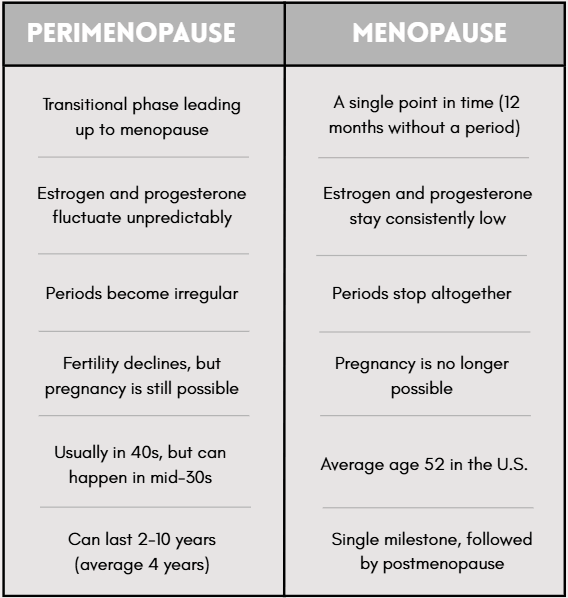
So what actually separates perimenopause from menopause? It comes down to three things: your hormone levels, cycle, and fertility status. The table below breaks it down:
How Do You Know If You’re in Perimenopause?

There’s no simple answer here. Perimenopause doesn’t have one clear-cut marker like menopause (12 months without a period). No single test can confirm it. Instead, doctors look at a combination of factors, including your age, cycle changes, and symptoms.
Tracking what’s going on in your body can help you and your doctor spot patterns and provide clarity. Cycle tracking apps and symptom journals can be incredibly helpful here. Note any changes in your energy, mood, or any other symptoms that pop up.
The good news is, no matter what your hormones are doing or what stage you’re in, there’s a lot you can do to feel better.
Natural Ways to Manage Perimenopause Symptoms
Whether you’re deep in perimenopause or still figuring things out, many simple lifestyle shifts can help. Here are some strategies that can help ease symptoms and support your body along the way:
Keep blood sugar stable

Blood sugar swings can worsen symptoms like hot flashes and mood swings.6 To prevent this from happening, build balanced meals with a mix of protein, fiber, and healthy fats. Eating at regular intervals can also help keep your blood sugar and mood steady.
Get your body moving
Regular movement supports energy, mood, and bone density, all of which matter more as hormones shift. Plus, it can help prevent weight gain that often sneaks up during the transition. Ideally, aim for a mix of strength training and cardio a few times a week.
Keep stress in check

Chronic stress can disrupt your body’s natural cortisol rhythm. This can throw off other hormones, which may make perimenopause symptoms feel more intense.7 Simple practices like journaling, deep breathing, and getting out in nature can help calm your nervous system.
If you live in the Orland Park area, be sure to check out our top picks for the best local spots to reset your stress response.
Prioritize sleep
Easier said than done, right? Hormone shifts, night sweats, and anxiety can make quality sleep hard to come by in perimenopause. Even so, small changes can make a difference. A cool, dark bedroom and consistent bedtime routine are two good places to start. Aim for 7-9 hours each night. For more helpful tips, check out our natural sleep remedies guide.
Love your gut

Believe it or not, your gut health can also influence perimenopause symptoms. Certain gut bacteria help metabolize and clear estrogen. If your gut microbiome is out of balance, excess estrogen can build up, which can make symptoms worse.8 Eating fiber-rich foods and fermented foods like yogurt and sauerkraut are two easy ways to support a healthy gut.
Avoid triggers
Caffeine can worsen hot flashes and night sweats for some women, especially post-menopause.9 Alcohol and sugar are common triggers, too. That doesn’t mean you need to cut them out altogether. Just be mindful. Pay attention to how your body responds, so you can figure out what’s worth scaling back.
How Functional Medicine Can Support the Transition
If you try the tips above and are still struggling with perimenopause symptoms, it may be time to dig deeper. Chronic stress, poor gut health, nutritional deficiencies, and adrenal and thyroid imbalances can all throw off hormones.
And that’s where functional medicine can help. Rather than focusing on symptoms alone, it looks for the root causes that can make perimenopause symptoms worse.
One way we do this is with the DUTCH test. This comprehensive hormone panel measures estrogen, progesterone, and cortisol, and how well your body metabolizes them. This provides a more complete hormone picture than standard labs alone.
Functional medicine isn’t meant to replace your OB-GYN. But it can provide an extra layer of personalized support to help the transition go more smoothly.
Get Support for Perimenopause and Menopause with Functional Medicine in Orland Park, IL
Perimenopause and menopause look different for every woman. But no matter what your journey looks like, you don’t have to guess your way through it or wait until symptoms feel unbearable to get support.
If hot flashes, sleep issues, or mood swings are making life hard, functional medicine can help you navigate hormone shifts with more ease.
At Anchored in Health, our functional medicine doctor takes the time to understand what’s really going on with your body. From there, you get a plan tailored just for you.
Live in the Orland Park area and ready to find relief? Follow these steps:
- Contact us with questions
- Schedule your first appointment with a functional medicine doctor in Orland Park, IL
- Get holistic support to help calm perimenopause and menopause symptoms.
Other Holistic Health Services at Anchored in Health in Orland Park, IL
Anchored in Health provides a wide variety of services to support your body throughout the perimenopause journey. This includes chiropractic care, massage therapy, acupuncture, and the Shape ReClaimed program. In addition, we offer genetic testing, thermography, and Vibrant Wellness testing to help uncover the root causes behind mysterious symptoms. If you live in the Orland Park or Chicago area and are looking for holistic support for perimenopause, reach out to us today!
Disclaimer: The information provided on this blog is for educational and informational purposes only and is not intended to diagnose, treat, cure, or prevent any disease. The content is not a substitute for professional medical advice, diagnosis, or treatment. Always seek the guidance of a qualified healthcare provider with any questions you may have regarding your health or a medical condition.
Reading this blog does not establish a doctor-patient relationship between you and Anchored In Health or any of its practitioners. Reliance on any information provided in this blog is solely at your own risk.
Sources:
- Perimenopause: From Research to Practice | PMC
- Perimenopause | Cleveland Clinic
- Menopause Basics | Office on Women’s Health
- Cleveland Clinic | Menopause
- Menopause Symptoms and Relief | Office on Women’s Health
- The Potential Role of Glucose Transport Changes in Hot Flash Physiology: A Hypothesis | PMC
- Stress-induced increases in progesterone and cortisol in naturally cycling women | PMC
- Estrogen–gut microbiome axis: Physiological and clinical implications | Maturitas
- Study Suggests Caffeine Intake May Worsen Menopausal Hot Flashes, Night Sweats | Mayo Clinic News Network