

Ever jolt awake at 3 am like you had a shot of espresso? Or feel restless or wired at night when you should be winding down? If so, you’re not alone. Modern life makes it easy for our bodies to fall out of their natural rhythm.
Yep, I’m talking about your circadian rhythm: your body’s 24-hour internal clock. It regulates your sleep-wake cycle and the release of important hormones, including cortisol.
The problem? Sometimes your internal clock can get thrown off, disrupting your natural cortisol rhythm. Over time, this may contribute to anxiety, low energy, sleep issues, brain fog, and more. In this article, we’ll cover what the cortisol circadian rhythm is and how to restore balance to your body with functional medicine.
How Your Circadian Rhythm Works
Your circadian rhythm is your body’s internal clock that works on a 24-hour cycle. It controls your sleep-wake cycle, telling your body when to wake up and go to sleep. But it also regulates many other processes, including hormone release, digestion, and metabolism. Here’s how it works.
Inside your brain’s hypothalamus sits a bundle of cells called the suprachiasmatic nucleus (SCN).1 Simply put, the SCN is your body’s “master clock.” As you go about your day, it acts like your central pacemaker, sending signals that regulate behavior and physiology.
The SCN’s signals influence:
- Sleep-wake cycles
- Hormone secretion
- Body temperature
- Appetite and digestion
- Metabolism and glucose levels
- Stress response
Your SCN is extremely sensitive to light and dark. It aligns your sleep-wake cycle to environmental cues like morning sunlight. These cues influence the release of hormones, including melatonin, which helps regulate sleep.
But melatonin isn’t the only hormone on a schedule. Your circadian rhythm also helps coordinate the timing of cortisol.
What is the Cortisol Circadian Rhythm?

Cortisol is a hormone produced by your adrenal glands. It’s best known as your body’s main stress hormone, but it does way more than initiate “fight or flight.” It helps regulate inflammation, glucose control, blood pressure, and even your sleep-wake cycle.
Just like melatonin rises at night, cortisol follows its own daily rhythm. Shortly after you wake up, cortisol levels peak.2 This is known as the cortisol awakening response, and it gives you a shot of energy to start your day. Think of it as your body’s morning cup of coffee (minus the caffeine).
Throughout the day, cortisol gradually declines. By the evening, levels are low, which helps you wind down and prepare for sleep. Cortisol reaches its lowest point around midnight.2,3 From there, it gradually rises again as you approach your waking hours.
This predictable rise and fall is cortisol’s natural circadian rhythm. It influences your energy, stress response, metabolism, and overall daily functioning. But sometimes cortisol’s rhythms can get out of sync.
How Circadian Rhythm Disruption Affects Cortisol
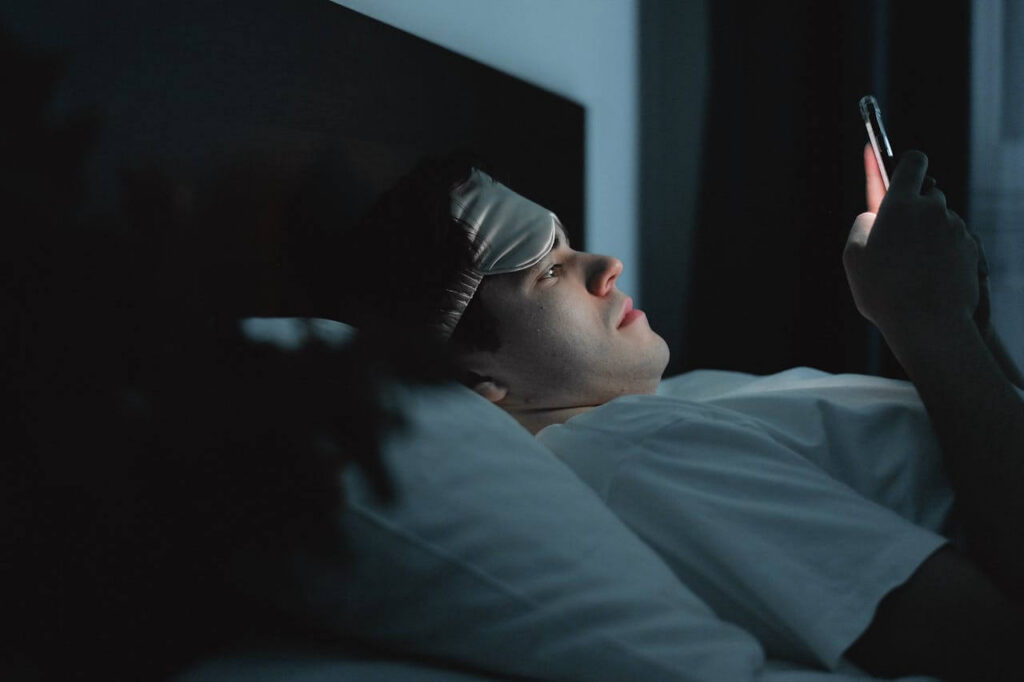
In our modern world, it’s easy for your circadian rhythm to get confused.
Here are some common circadian rhythm disruptors:4
- Artificial light at night: Light exposure in the evening suppresses melatonin production. This is especially true for blue light from screens, which smartphones and TVs emit.
- Lack of daytime light exposure: Most of us spend way too much time indoors these days. Not getting enough sunlight can make it harder for your internal clock to stay in sync.
- Irregular sleep patterns: Inconsistent bedtimes and wake times can disrupt your master clock.
- Shift work: Night shifts or rotating shifts force your body to operate against its natural rhythm.
- Travel: Crossing several time zones in a short period can also make your internal clock get out of sync.
- Meal timing: Late-night meals force your digestive system to work overtime. This can, in turn, interrupt your sleep.
- Physical activity: Exercising within an hour before bed can disrupt your sleep-wake cycle and make it harder to wind down.
- Caffeine and alcohol: Consuming caffeine or alcohol too close to bed can interfere with restful sleep.
If enough of these disruptors go on for too long, it can start interfering with cortisol’s natural rhythm.
Research shows that irregular bedtimes or skimping on sleep can blunt your morning cortisol surge.5 Even an hour of light exposure at night can prevent cortisol from dropping as it should.6 Over time, these patterns can disrupt the system that regulates your stress response, called the HPA axis.
Cortisol, Stress, and the HPA Axis
The HPA axis, short for hypothalamus-pituitary-adrenal axis, is the system that regulates cortisol. It’s also called your “stress response system.” Anytime you perceive a threat, your hypothalamus sends the danger signal to the pituitary gland. It then triggers your adrenal glands to release cortisol.
The HPA axis also coordinates cortisol’s daily rhythms. Unfortunately, poor sleep or lack of sleep can disrupt your HPA axis. Cortisol may stay elevated when it should be low or fail to rise normally in the morning. People with insomnia, for example, tend to have higher levels of cortisol in the evening.7 This can make it harder to fall asleep, creating a vicious cycle.
But the relationship between sleep and the HPA axis goes both ways. Poor sleep can change how the stress system functions, and HPA axis dysregulation can make it harder to get restorative sleep.
Over time, this can make your stress response less predictable and flexible. Cortisol patterns may become erratic, or it can become harder for your body to shift out of “fight or flight.” This is often referred to as adrenal fatigue, or more accurately, HPA axis dysfunction.
Signs Your Cortisol Rhythm May Be Off

If your cortisol patterns have gotten out of sync, your body may send some warning signs.
Common signs your cortisol rhythm may be off:
- Waking up exhausted
- Trouble falling and staying asleep
- Feeling “tired but wired”
- Afternoon energy crashes
- Anxiety and irritability
- Brain fog
- Intense salt or sugar cravings
- Weight gain, especially around the belly
- Overreliance on caffeine
These signals are your body’s way of showing that your stress response system may be struggling. The good news? You’re not stuck. The HPA axis is highly responsive to lifestyle changes, and optimizing your circadian rhythm is easier than you think. All it takes are some new healthy habits.
How to Reset Your Cortisol Circadian Rhythm

Here are a few simple ways to get your sleep and cortisol rhythms back on track:
Get morning light exposure.
Morning sunlight helps reset your body’s internal clock. It gets your body in sync with nature and supports more restful sleep.8 Aim for 10 to 30 minutes within an hour of waking. But even a few minutes is better than nothing!
Keep consistent sleep and wake times.
The more predictable your routines are, the stronger your circadian rhythm. Do your best to stick to a consistent sleep schedule, even on the weekends.
Be smart about meal timing.
Late-night meals can delay your internal clock and interfere with digestion.9 If possible, try to finish your last meal within 2-3 hours before bed.
Reduce evening stimulation.
Bright artificial lights and blue light from screens can suppress melatonin.10,11 To prevent this, try dimming the lights once the sun sets and limit electronic devices an hour before bed. Blue light blocker glasses can be helpful, too!
Time exercise right.
Exercise during daylight hours helps reinforce your internal clock. On the flip side, intense workouts too close to bedtime can make it harder to fall asleep. Stick to gentle movement like yoga, walks, or stretching in the evening.
Create a wind-down routine.
A relaxing evening ritual gives your body a clear signal that it’s time for sleep. Reading, stretching, or taking a warm bath can help lower cortisol and prepare your brain for rest.
Sprinkle stress relief into your day.
Even small moments of relaxation can help you shift out of stress mode. A few minutes of deep breathing, a quick meditation, or some vagus nerve stimulation can all help calm your nervous system. This can, in turn, support better sleep and cortisol balance.
When shifting sleep habits, or any lifestyle habit for that matter, give yourself grace. Rather than trying to implement all these habits at once, start small and pick one. Add in others as you feel ready. You don’t need to do it perfectly. Even small shifts can make a big difference over time!
Want more helpful tips? Check out our functional medicine sleep guide.
When to Seek Functional Medicine Support
Lifestyle changes are always a great starting point. And for some people, they’re enough to improve sleep and healthy cortisol patterns. But sometimes, deeper imbalances keep your cortisol rhythm from fully resetting.
That’s where functional medicine in Orland Park, IL comes in.
Functional medicine goes beyond symptoms to find root causes disrupting your stress system. Inflammation, blood sugar imbalance, thyroid issues, gut dysbiosis, and chronic stress can all take a toll.
As a functional medicine doctor at Anchored in Health, I use advanced testing to evaluate your cortisol patterns to see where your rhythm is off. From there, I create a personalized plan to restore balance to your body. This includes nutrition guidance, lifestyle recommendations, and supportive supplements, tailored just for you.
Restore Healthy Cortisol & Circadian Rhythm with Functional Medicine in Orland Park, IL
Struggling with poor sleep, chronic stress, or low energy? Functional medicine in Orland Park, IL can help. At Anchored in Health, our functional medicine doctor takes a close look at your cortisol patterns and creates a personalized plan to get your body back in sync.
Live in the Orland Park or Chicago area and ready to get your sleep back on track? Here’s how to get started:
- Contact us with questions.
- Book your first appointment with our functional medicine doctor in Orland Park.
- Discover how restoring your cortisol rhythm can improve your sleep, energy, and overall well-being!
Other Holistic Health Services at Anchored in Health in Orland Park, IL
Anchored in Health offers a wide variety of services to help balance your nervous system and support restful sleep. This includes acupuncture, chiropractic care, and massage therapy. We also provide thermography, genetic testing, Vibrant Wellness testing, and the Shape ReClaimed program. If you live in the Chicago area and are looking for holistic ways to support better sleep and stress resilience, we’re here to help. Reach out to us today to learn more!
Disclaimer: The information provided on this blog is for educational and informational purposes only and is not intended to diagnose, treat, cure, or prevent any disease. The content is not a substitute for professional medical advice, diagnosis, or treatment. Always seek the guidance of a qualified healthcare provider with any questions you may have regarding your health or a medical condition.
Reading this blog does not establish a doctor-patient relationship between you and Anchored In Health or any of its practitioners. Reliance on any information provided in this blog is solely at your own risk.
Sources:
- Neuroanatomy, Nucleus Suprachiasmatic | NCBI
- Interactions between sleep, stress, and metabolism: From physiological to pathological conditions | PMC
- The Functional and Clinical Significance of the 24-Hour Rhythm of Circulating Glucocorticoids | Endocrine Reviews
- Circadian Rhythm Disorders: Causes and Risk Factors | NIH
- Recurrent short sleep, chronic insomnia symptoms and salivary cortisol: A 10-year follow-up in the Whitehall II study | PMC
- The Effects of Red and Blue Lights on Circadian Variations in Cortisol, Alpha Amylase, and Melatonin | PMC
- Interactions between sleep, stress, and metabolism: From physiological to pathological conditions | PMC
- Effects of light on human circadian rhythms, sleep and mood | PMC
- Meal Timing Regulates the Human Circadian System | PMC
- Evening home lighting adversely impacts the circadian system and sleep | Nature
- Blue light from light-emitting diodes elicits a dose-dependent suppression of melatonin in humans | Pubmed